

-
-
From pain to purpose, finding your community is everything.
Can you imagine being 27 years old, a newlywed and the mother of a two-year-old son when you suddenly find a lump during a self-exam in the shower?
Neither could Lynette.Next came the appointments, scans, biopsy, and the words no one is ever prepared to hear:
"You have breast cancer."
She couldn’t believe it; at 27 years old, she was diagnosed with Stage III, Invasive Ductal Carcinoma, Triple Negative Breast Cancer (TNBC). She didn’t know at the time of her diagnosis, but learned shortly afterwards that TNBC is one of the most aggressive forms of breast cancer and can be much more difficult to treat than some other types, depending on when it is caught.
Lynette had support at home and at church, but she wasn’t ready to talk about her diagnosis. She kept the news to herself and, at first, even from her twin sister, Natasha.
Before chemotherapy, surgeries, and radiation treatments began, Lynette faced another dangerous threat: situational social isolation.
Studies have shown that social isolation of any kind has negative impacts on both physical and mental health, which can directly impact a person’s treatment and healing.
At the time, Natasha was pregnant with her fourth baby and due very soon. Lynette didn’t want to worry about her sister as she was about to welcome her baby into the world or really tell anyone before she had a plan with her care team.
Lynette was aware that one of her coworkers, who was also a twin, was a breast cancer survivor named Sandra. Lynette shared her diagnosis with her, and Sandra immediately suggested that Lynette reach out to the Delaware Breast Cancer Coalition (DBCC). Lynette found the courage to make the call, and today she says,"That call changed everything!"
Lynette was put directly in touch with Lois, who at the time was the Survivorship Program Director for New Castle County and Kent County.
Lynette shared how Lois would call and check on her to make sure she had whatever she needed. Lois searched for a Peer Mentor close to Lynette’s age, but as Lois mentioned, “back then there were not many young survivors in the Peer Mentor Program as we were really just getting started.” Lynette was matched with a Peer Mentor with the same diagnosis type who was also a mother, but otherwise they did not share much in common.
Lois continued to stay in touch with Lynette and ended up truly becoming the mentor and voice of hope that Lynette desperately needed during her fight. At the time, Lois was 7 years out from breast cancer treatment, and they shared similar faith and an almost identical diagnosis. Through DBCC, Lois was able to provide a calm voice of reason, strength, and hope when Lynette needed it most. Today Lynette lovingly said, “17 years later, Lois has become like an Auntie to me and is a part of my family.”
Even with the support from Lois as a survivor and now a friend, Lynette still longed for a space where she could connect with other black women who shared similar experiences with breast cancer.
Lynette’s fight began with six rounds of chemotherapy, once every other week. As they closely monitored her tumor, it shrank enough to pause chemotherapy and do surgery to remove the tumor. Once that step was complete, she would go on to receive another three rounds of chemotherapy and then thirty days of radiation with no medication to follow.
When Lynette was ready to tell her twin sister, she shared the news over the phone. It was a difficult call to make. Then Lynette invited Natasha and her children over to her house to show the kids that she was okay. When they arrived, Natasha recalls Lynette wearing a headscarf and showing the kids how she had lost her hair in a way that helped them to understand and not be so afraid of the changes in her appearance, as best she could.
As Lynette was hoping to begin the final steps in her journey of plastic reconstructive surgery, her plastic surgeon asked her a question that would flip her world upside down again.
The plastic surgeon asked if Lynette had any genetic testing for breast cancer.
She answered no, and then the doctor encouraged her to get it done immediately to help understand her risk of breast cancer in her remaining breast. She got the news back and was devastated that she had the BRCA1-positive gene. According to a John Hopkins study, when someone carries a BRCA gene, their lifetime risk of breast cancer ranges from 45%-85% for developing breast cancer in their lifetime.
New plan. Now she needed a new plan of action. She had to delay the reconstructive surgery with her plastic surgeon and endure more surgery to remove the risk of getting breast cancer in her remaining breast.Lynette shared that it was devastating to get that news and to have that step so late in her breast cancer journey, but that her plastic surgeon ultimately saved her in the long run.
Reflecting on her journey, Lynette felt that the stretch of surgeries really changed their family planning timeline and became a true financial burden which impacted them for many years following Lynette’s treatment.
As a result of Lynette’s diagnosis, Natasha followed the recommendation to get mammograms. However, when Lynette encouraged her twin sister Natasha to get genetic testing done, Natasha felt strongly against it, as they were not identical twins, had no family history of breast cancer, and she was already getting screened. She felt covered.
Fast forward three years later, life was beginning to feel normal again when Natasha was sitting down and touched the top of her chest and discovered a lump of her own.
The discovery came only a month after Natasha received clear mammogram results and a few weeks before they celebrated their 30th birthday.
Now, as a mother of four, Natasha was terrified, and she called her twin sister, Lynette, right away.
Next for Natasha came the appointments, scans, biopsy, and a path that felt all too familiar to Lynette. She made an appointment with the same doctor who helped save her sister and felt nervous but hopeful. Until the news was bad.
Natasha couldn’t believe it; at 29 years old, she was diagnosed with Stage I Invasive Ductal Carcinoma, ER+ breast cancer. A totally different diagnosis than her twin sister, just two years later. After genetic testing, she also tested positive for the BRCA1 gene.
After the sisters left the doctor’s office following Natasha’s diagnosis, Lynette said, “I have beaten cancer, and I have the power to speak to my healing and that you will beat it too.” Then she pointed to the rainbow and told Natasha, “The rainbow symbolizes God’s promise over your life, that everything he promised over your life would still happen and that you will not die.” Natasha describes that moment as very impactful to her and truly what gave her hope that she would live and not die.
Natasha had faith in her sister’s words and believed that if Lynette could overcome breast cancer, she could too. Unlike Lynette in the earliest days after her diagnosis, she was not alone. Her sister was there to offer advice and hope as another young Black woman who had beaten breast cancer, and the DBCC community became a vital part of Natasha’s fight.
Natasha’s breast cancer started off fast and aggressively. She started with a 1 cm tumor that she had biopsied, and following her biopsy, she noticed a change in the size of her tumor. She grew concerned and reported the change to her doctor, who explained it was likely blood from the recent biopsy. Shortly afterwards, it was discovered that Natasha’s tumor had in fact grown, and very aggressively, from 1cm to 10 cm. Her diagnosis went from Stage 1 to Stage III, fast. As a result, her battle was now fast-tracked, and emergency chemotherapy immediately began, totaling eight rounds, followed by twenty-eight days of radiation. She was then prescribed to take medication daily for the next ten years. Natasha felt she wasn’t truly being heard when she shared concerns after her biopsy, and encouraged anyone with a concern to speak up and seek a second opinion right away if you feel the right actions are not being taken.
Both sisters admitted the hardest part of their journey was being able to admit you need the help and accept it. They shared how you grieve the part of yourself that could do it all and how that can be difficult, especially alone.
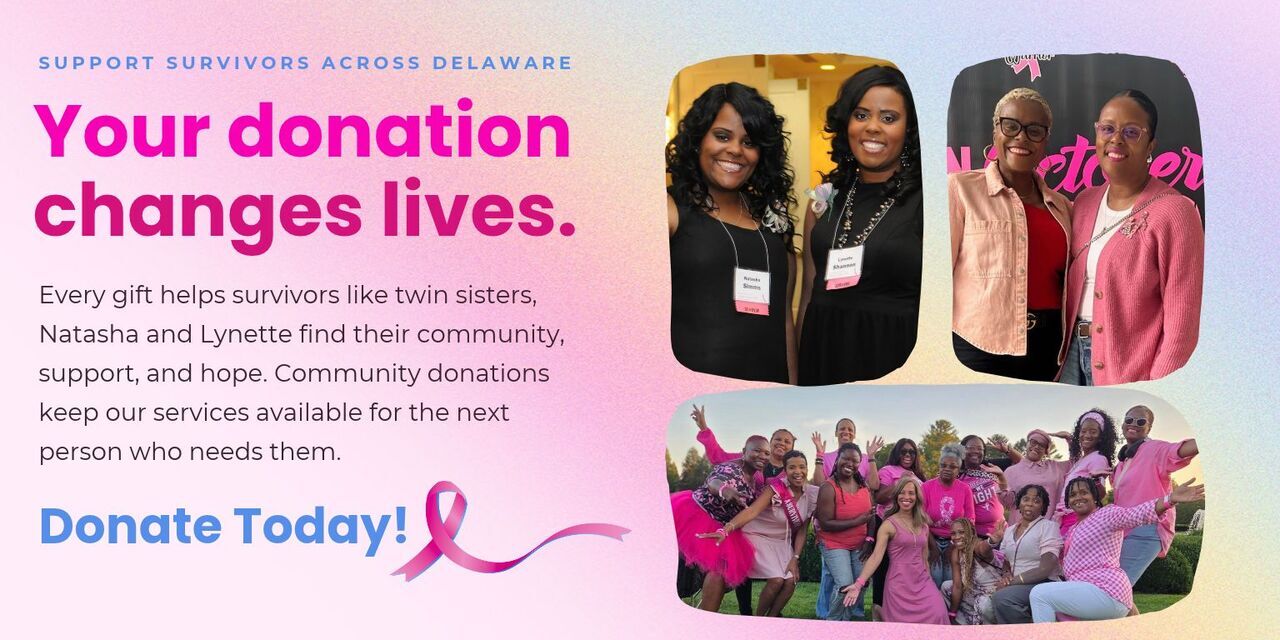
The compassionate support they received inspired them to create that same sense of connection for others. Eleven years ago, Lynette and Natasha shared their thoughts and ideas around what was missing for black women and women of color. With assistance from Lois, the twins presented the idea to the DBCC Board of Directors, and DBCC allowed us to develop and run My Sister’s Keeper under the organization.
What began as conversations about representation, inclusive wig styles, and belonging for young women and people of color grew into My Sister’s Keeper, a statewide DBCC support network that now serves people of color and helps more breast cancer survivors feel seen, heard, and understood.
Presently, both sisters are thriving survivors, mentors, advocates, and extraordinary community leaders.
Lynette wishes for those newly diagnosed to know, “that they are their Chief of Medical Staff, and you have choices and need to ask questions.”
Natasha wishes for those newly diagnosed to know “breast cancer is not just a battle of the body; it's a battle of the mind too. You must remember who you are, and if you don’t know who you are, it’s the perfect time to find out.”
Today, somewhere in Delaware, someone is hearing "you have breast cancer." They may be young, lacking a support system, raising a child, worried about paying bills, terrified of losing their job, or facing all these challenges at once.
Your year-end gift can ensure they do not face breast cancer without hope, connection, or support.
Thank you for supporting DBCC’s Fall Giving Campaign and breast cancer survivors throughout Delaware like Lynette and Natasha.
YOUR GIFT MATTERS
$100
Will fund early detection navigation and outreach initiatives, saving lives through regular screenings.
$250
Will contribute to survivorship programming providing mental health, wellness, and support resources.
$1,000
Will help support basic living needs of a survivor (rent, food, utilities, etc.) who is actively in treatment so they can focus on healing.